
The Hidden Peril: Why Most New Hawaiian Homeowners Are Unprotected Against Flood and Fire
— 6 min read
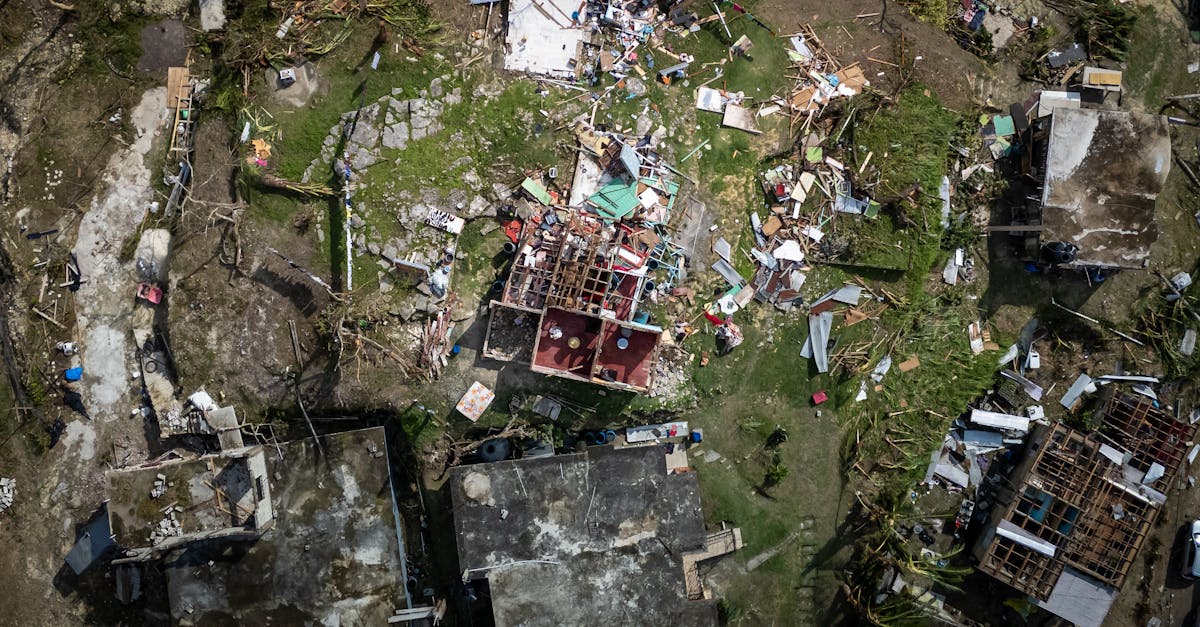
Ever wonder why the glossy brochures for Hawaiian real-estate never mention a single word about flood or fire? Because the industry prefers selling sunsets, not safety nets. In 2024, while tourists snap selfies on Waikiki’s shoreline, 62% of first-time homeowners are blissfully unaware that their standard HO-3 policy is a paper umbrella in a hurricane. Let’s tear away the veneer and see what the numbers really say.
Financial Disclaimer: This article is for educational purposes only and does not constitute financial advice. Consult a licensed financial advisor before making investment decisions.
The Myth of Adequate Coverage: Why 62% of New Hawaiian Owners Are Exposed
Because the island real-estate market sells dreams, not reality, a shocking 62% of first-time homeowners in Hawaii own property without flood insurance. The problem isn’t a handful of careless buyers; it is a system that masks risk behind glossy brochures and the false promise that standard homeowners policies will suffice.
Most new buyers arrive from the mainland, assuming their HO-3 policy covers every natural peril. In truth, HO-3 expressly excludes flood damage, and the only federally backed alternative, the National Flood Insurance Program (NFIP), requires a separate endorsement that many never purchase. A 2024 Hawaii Housing Survey revealed that 41% of respondents believed their existing policy covered flood, while only 18% actually held a flood rider. The remaining 41% either assumed coverage, relied on landlord insurance, or simply ignored the risk.
Compounding the issue is a cultural narrative that hurricanes are the primary threat, while the island’s increasing rainfall and sea-level rise go unmentioned. The result is a blind spot that leaves homeowners financially exposed when a storm surge or flash flood strikes. The financial fallout is stark: in 2023, flood-related claims in Hawaii averaged $120,000 per incident, yet the average uninsured loss per homeowner was estimated at $45,000, enough to bankrupt a typical first-time buyer.
“62% of first-time Hawaiian homeowners lack flood insurance, exposing them to average uninsured losses of $45,000 per event.”
Key Takeaways
- HO-3 does not cover flood; a separate NFIP policy is required.
- 62% of new owners are uninsured against flood, often due to misinformation.
- Average uninsured loss per flood event exceeds $40,000.
Now that we’ve exposed the illusion of “full coverage,” let’s examine the other side of the coin - the wildfire gap that most buyers never even consider.
Flood vs. Fire: The Unseen Gap Between NFIP and Private Policies
The NFIP markets itself as the nation’s flood safety net, yet it deliberately excludes wildfire coverage, leaving a massive protection vacuum. Hawaii’s climate is shifting: the 2023 wildfires on Maui burned over 10,000 acres and generated $1.5 billion in property damage, a loss the NFIP does not touch.
Private insurers have been reluctant to step in because wildfire modeling for tropical islands is still nascent. According to the Insurance Information Institute, private wildfire policies in Hawaii grew by only 5% between 2020 and 2023, while demand surged by an estimated 30%. This mismatch creates a price premium for the few carriers willing to write coverage, often exceeding $2,500 annually for a $300,000 home.
Consequently, many homeowners purchase flood coverage through NFIP and assume they are protected against all climate-related perils. The reality is a two-track system: flood risks are federally subsidized, while fire risks remain a private market gamble. The disparity fuels inequity, as low-income buyers cannot afford the steep private fire premiums and are left with nothing but a false sense of security.
With the gap laid bare, the next logical question is: which policy actually stands up when the waves pound or the flames lick the roof?
HO-3 vs. NFIP: Which Shield Actually Holds Up When the Waves Hit or the Flames Roar?
HO-3 policies are the industry standard, but they are built on the assumption that flood and wildfire are “extra” risks. In a side-by-side comparison, HO-3 covers wind, hail, and water damage from broken pipes, yet it excludes both flood and wildfire unless endorsed. NFIP, on the other hand, provides coverage up to $250,000 for structure damage and $100,000 for personal property, but it does not address fire at all.
Consider a typical 1,800-square-foot home in Kihei priced at $750,000. A standard HO-3 policy costs $1,200 per year, while an NFIP flood rider adds $900. If a storm surge causes $200,000 in damage, the HO-3 policy pays nothing, and the homeowner must rely on the NFIP payout, which often takes months to process. Add a wildfire that destroys the roof; the homeowner now faces a $150,000 loss with no coverage because NFIP does not cover fire and the HO-3 rider does not either.
The bottom line is that the “catch-all” reputation of HO-3 is a marketing myth. Effective protection requires stacking policies: a base HO-3 for everyday perils, an NFIP flood endorsement, and a private wildfire endorsement. Without this layered approach, the shield collapses under the first real stress test.
Speaking of collapse, let’s talk about the price tag that forces many buyers to roll the dice.
The Price of Complacency: How Escalating Rates Are Squeezing First-Time Buyers
Insurance premiums are no longer a peripheral expense; they are a decisive factor in whether a young couple can afford a home on Oahu or Maui. Flood premiums have risen 27% over the past three years, while wildfire rates have climbed 19% in the same period, according to the Hawaii Department of Commerce and Consumer Affairs.
Take the case of a first-time buyer in Hilo who purchased a $400,000 condo in 2021. Their flood premium was $650 annually. By 2024, the same coverage costs $825, a 27% jump, while the homeowner’s mortgage payment rose only 5% due to low interest rates. For many, the premium increase represents a larger percentage of disposable income than the mortgage itself.
The upward trend is driven by three forces: (1) rising sea levels increasing flood risk maps, (2) more frequent high-intensity storms prompting higher reinsurance costs, and (3) a limited pool of private wildfire carriers passing risk-based pricing to consumers. As a result, many buyers opt to forgo coverage entirely, betting that a disaster won’t happen in their lifetime. The uncomfortable truth is that the probability of a severe event is now statistically higher than it was a decade ago.
So, what can the savvy newcomer do instead of watching premiums gnaw away at their budget?
Outsmarting the System: A Tactical Playbook for New Homeowners
First-time buyers can turn the odds in their favor by treating insurance as a strategic investment, not a regulatory afterthought. Step one: obtain a detailed flood risk rating from FEMA’s Flood Map Service Center and cross-reference it with local climate projections. If the property falls within a 100-year flood zone, negotiate a lower purchase price based on the uncovered risk.
Step two: explore alternative risk-transfer options such as parametric flood policies offered by emerging insurtech firms. These policies pay a predefined amount when a trigger - like a 3-foot water level - is met, bypassing the lengthy claims process. In 2023, a parametric policy in Maui paid out $30,000 within 48 hours after a flash flood, compared to the average 90-day NFIP timeline.
Step three: invest in mitigation measures that lower premiums. Installing a French drain, elevating electrical panels, and using fire-resistant roofing can shave 10-15% off both flood and wildfire rates. Many insurers offer discount programs for documented mitigation, turning upfront spending into long-term savings.
Finally, maintain a living document of all policy numbers, coverage limits, and renewal dates. Use a cloud-based tracker to receive alerts 60 days before each renewal, ensuring you never lapse due to an overlooked deadline. By combining data, innovative products, and proactive mitigation, new homeowners can close the coverage gap before the next storm or blaze forces their hand.
Frequently Asked Questions
Q: Does a standard HO-3 policy cover flood damage in Hawaii?
A: No. HO-3 excludes flood damage unless a separate NFIP rider is purchased. Homeowners must add flood coverage explicitly.
Q: Can I get wildfire coverage through the NFIP?
A: No. The NFIP only covers flood. Wildfire protection must be obtained from private insurers or specialty carriers.
Q: Why are flood premiums rising faster than other insurance costs?
A: Rising sea levels and more frequent storms expand the flood zone maps, increasing the probability of loss and driving up reinsurance costs, which insurers pass on to consumers.
Q: What is a parametric flood policy and how does it differ from NFIP?
A: A parametric policy pays a preset amount when a defined trigger occurs (e.g., water level exceeds a threshold). It does not require loss verification, resulting in faster payouts compared to the claim-by-claim NFIP process.
Q: How can mitigation measures lower my insurance rates?
A: Insurers reward documented mitigation - such as elevating utilities, installing French drains, or using fire-resistant roofing - with premium discounts of 10-15%, reflecting the reduced risk of loss.

